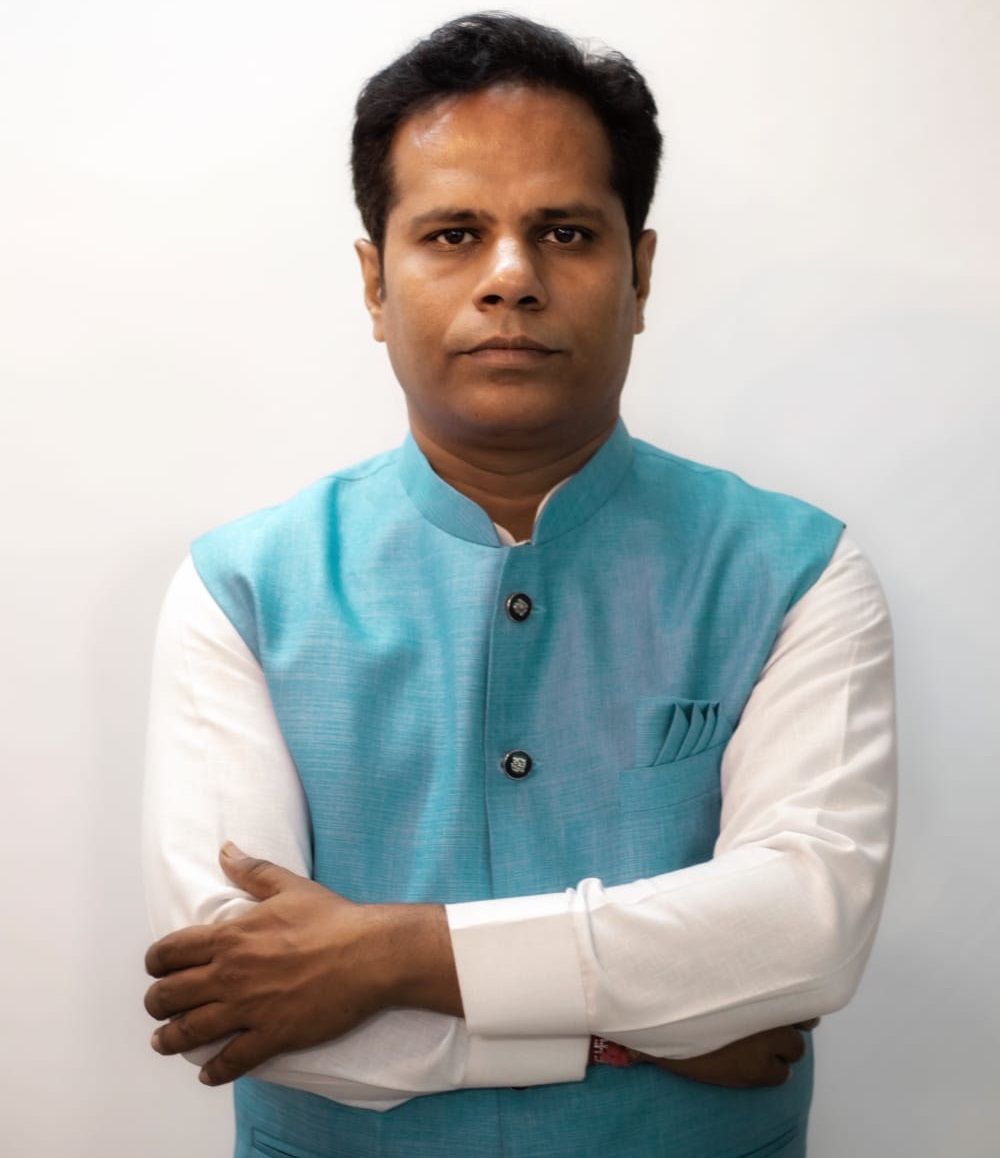
In the bustling city of Ahmedabad, a man was born with a heart brimming with a unique sense of purpose, eager from a young age to serve his country and its people. This individual’s life trajectory was not one of self-interest or personal gain, but one dedicated to higher ideals – serving the nation, preserving culture, empowering the marginalized, and upholding values of compassion and non-violence. His journey was deeply shaped by his Jain roots, the teachings of peace and ahimsa, and his enduring dedication to the service of humanity.
Childhood: A Life of Spiritual Dedication
From his early years, this individual embraced the spiritual path and dedicated himself to the service of saints and spiritual figures. He saw this as a way to connect to a higher cause and to cultivate a life of humility and service. Inspired by the ideals of seva (selfless service), his childhood was spent understanding the essence of living for others. The teachings he absorbed laid the foundation for his later work in shaping society and contributing to the betterment of his community.
His early association with saints also developed in him a deep reverence for India’s cultural and spiritual heritage. He believed that preserving India’s values and traditions was paramount in a rapidly changing world. To further this goal, he took up the study of Sanskrit and Prakrit, two ancient languages integral to Indian philosophy, religion, and culture. Through these studies, he gained a deep understanding of Indian scriptures, philosophies, and cultural practices. He realized that the essence of India’s greatness lay in its spiritual heritage and that its survival was dependent on preserving these age-old traditions.
The Influence of Jainism: A Path of Non-Violence and Compassion
Being born into a Jain family, the teachings of Jainism deeply influenced his worldview. Jainism, with its emphasis on non-violence (ahimsa) and compassion for all living beings (jivdaya), shaped his outlook on life. He grew up with a firm belief that violence – in any form – was not the solution to the world’s problems. Instead, he championed peace, understanding, and dialogue as the path forward. His love for all life, human and non-human, inspired him to live a life where every action was measured by its impact on others. These values would later form the core of his work and inspire his approach to public service.
Seva and Social Service: A Life Dedicated to Others
From a young age, he engaged in acts of service, especially helping the poor and needy. He was particularly concerned with the plight of the underprivileged and sought ways to make a tangible difference in their lives. He frequently organized food distribution drives to feed the hungry, ensuring that no one went without a meal. His compassion knew no bounds, and he believed that feeding the
hungry was one of the highest forms of service. His acts of charity were not limited to material help; he also focused on providing emotional and spiritual support to those in need, uplifting their spirits and helping them find purpose in life.
Empowering Youth: Building the Future of India
As he grew older, his focus shifted to the youth of the nation. He firmly believed that the future of India lay in the hands of its younger generation, and that empowering them was the key to national progress. Upon reaching adulthood, he began actively working with the youth, providing guidance and consulting to help them make informed choices about their future. One of his primary concerns was to raise awareness about the various government schemes and initiatives available to young people, particularly those designed to support education, employment, and entrepreneurship.
He would organize seminars, workshops, and counseling sessions where young people could learn about these opportunities and get the help they needed to pursue their dreams. Through his efforts, many young people found meaningful employment and were able to contribute to their families and society. He believed that the youth had the potential to transform the nation, and he worked tirelessly to give them the tools and knowledge to succeed.
Women’s Empowerment: A Priority from the Beginning
Even in a society that often overlooked the importance of gender equality, this individual understood the crucial role that women play in the development of a nation. From early on, he prioritized women’s empowerment and advocated for greater opportunities for women in education, employment, and leadership. He believed that for India to truly progress, women needed to be given equal opportunities to thrive. His initiatives for women included vocational training programs, awareness campaigns about women’s rights, and support systems for women facing economic and social challenges.
Meditation and Positive Energy: A Holistic Approach
Meditation played a vital role in his life. He believed that inner peace and positivity were the keys to creating a positive environment in society. Through his personal practice of meditation, he developed a deep reservoir of positive energy, which he used to inspire and uplift those around him. He often led meditation sessions for others, helping them tap into their inner strength and remain positive in the face of adversity. He saw meditation not just as a personal spiritual practice but as a tool for social transformation, believing that a society filled with positive, mindful individuals would naturally move towards peace and progress.
Right to Education: A Lifelong Commitment
One of his most significant contributions was his work on the right to education. He was deeply committed to ensuring that every child, regardless of their background, had access to quality education. He believed that education was the foundation of a strong nation and that without it, India’s future would be bleak. To this end, he helped countless children gain admission to schools and provided them with the resources they needed to succeed. His work did not stop at merely enrolling children in school – he followed through on their progress, offering support and guidance to ensure they received a meaningful education.
His belief in the transformative power of education extended beyond just academic knowledge. He advocated for a holistic education that included moral and spiritual teachings, believing that a well-rounded individual could contribute more meaningfully to society. His dedication to the cause of education earned him respect and admiration, and he became a role model for many in the field of social service.
Serving the Nation: A Vision for India’s Future
His vision for India was one where every citizen had the opportunity to thrive, regardless of their caste, creed, or socio-economic background. He believed in an India where justice, equality, and compassion reigned supreme. He rejected the divisive politics of caste and religion and instead embraced a philosophy of karamvad, or the primacy of action. He believed that one’s actions, rather than one’s birth, should determine their place in society. This forward-thinking approach resonated with people from all walks of life, and he quickly gained a following among those who shared his vision of a united, progressive India.
He dedicated himself to serving the elderly and caring for saints, recognizing their wisdom and experience as invaluable resources for guiding the younger generation. He often sought the counsel of spiritual leaders and elders, believing that their guidance was essential for maintaining the cultural and moral fabric of the nation. He saw himself as a bridge between the old and the new, working to preserve India’s rich cultural heritage while also pushing the nation towards progress and modernization.
The Formation of Bharatiya Yuva Jan Ekta Party: A Movement for Change
Driven by his passion for serving the nation and empowering the youth, he eventually founded the Bharatiya Yuva Jan Ekta Party. This organization was built on the principles of unity, action, and service. It sought to bring together people from all backgrounds under a common banner, working towards the common good without the barriers of caste, religion, or political affiliation. The party focused on addressing key issues facing the nation, such as education, health, women’s empowerment, national security, food safety, the economy, and environmental protection.
Through this movement, he aimed to create a platform for young people to step into leadership roles and take responsibility for the future of their country. His party encouraged active participation in governance, pushing for reforms that would benefit the common man and uphold the values of equality, justice, and compassion. The Bharatiya Yuva Jan Ekta Party was not just a political organization; it was a movement for social change, a call for action to build a better future for India.
A Holistic Vision: Education, Health, Empowerment, and National Safety
His vision for India was holistic, encompassing all aspects of human life. He believed that a strong nation needed a healthy, educated, and empowered population. His efforts in education were complemented by his work in healthcare, where he advocated for accessible, affordable healthcare for all. He was also deeply committed to the empowerment of marginalized communities, believing that every citizen had the right to live with dignity and purpose.
In addition to these social issues, he placed great emphasis on national safety, food security, and environmental protection. He believed that India’s progress could not come at the cost of its natural resources or its people’s safety. His work in these areas demonstrated his far-reaching vision for a sustainable and secure future for India.
In conclusion, his life is a testament to the power of service, compassion, and dedication. Through his work, he has inspired countless individuals to rise above personal and societal limitations and contribute to the greater good. His legacy lives on in the lives he has touched, the changes he has initiated, and the vision he has set for the future of India.
